Wellness
Virtual Care: How does it work?
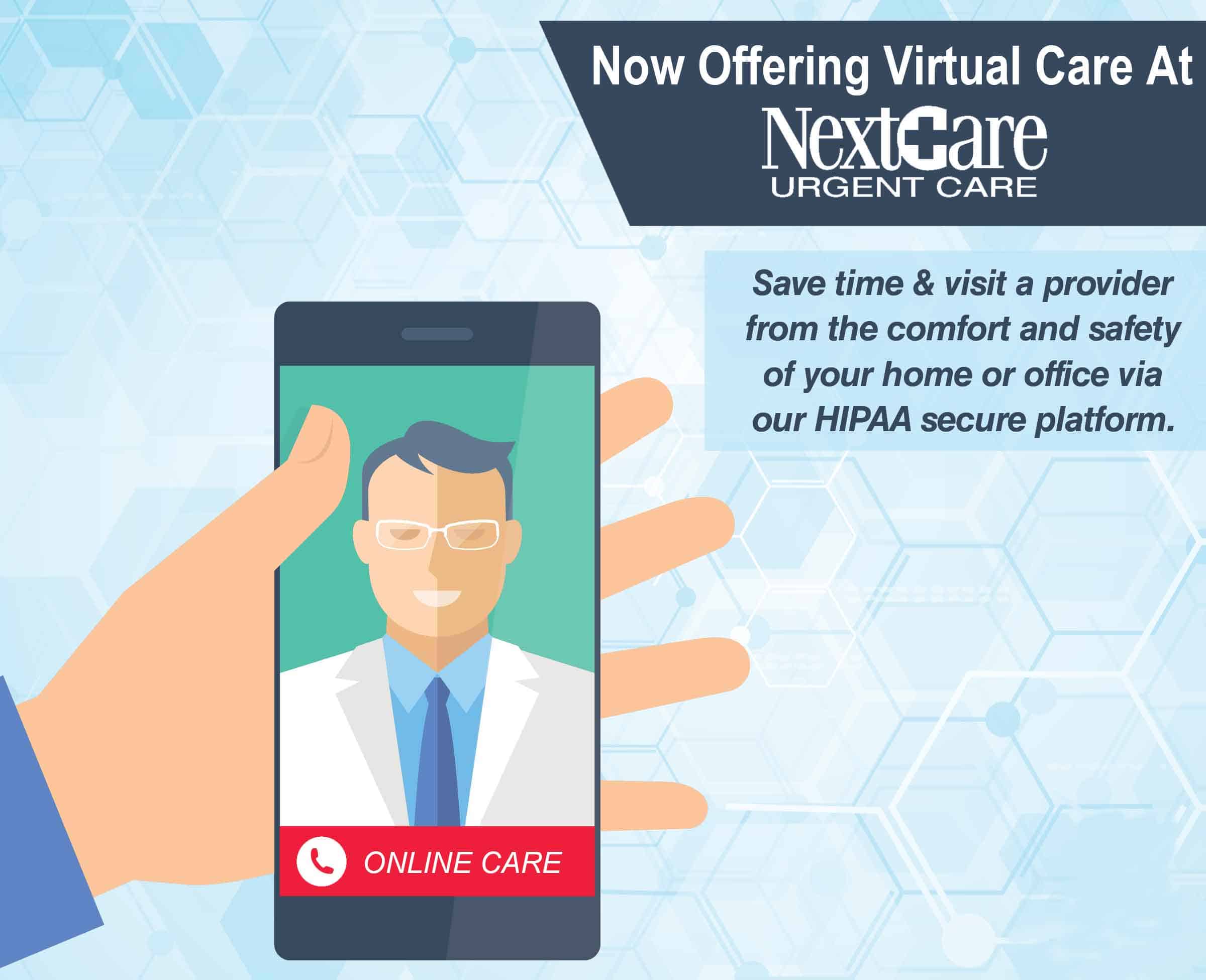
The emergence of COVID-19 has created a world that has had to adjust and change to fit the current landscape. Whether it’s having to wear a mask when going to the grocery store or having to video chat with your family instead of visiting them in person, all in all, there has been a variety of change. With the changes brought on by COVID-19, NextCare and the healthcare community has also had to adapt in order to best serve our patients. This has lead NextCare and our family of brands to institute a Virtual Care program to help reach our patients from the comfort and safety of their home and office. In this piece, we will explain what the Virtual Care process is, how it works and what we are able to treat.
What is Virtual Care & How it works?
NextCare and its family of brands are dedicated to creating a safe and accessible healthcare environment for our patients. To continue to serve our communities while we face COVID-19, we are excited to announce the expansion of our services to offer Virtual Care Video Visits for many minor care conditions.
Our Virtual Care program allows you the opportunity to access a provider from the comfort and safety of your home or office with your web browser via the HIPAA secure platform. Virtual Care allows you access to a provider via your phone, tablet or computer and allows you to get the treatment and help you are seeking without physically visiting the clinic.
Our Virtual Care visits are safe, private and HIPAA-compliant. Our Virtual Care providers work from a private office, where none of the virtual visit is recorded, allowing for a personal and one on one private experience with the provider.
Virtual Care Video visits are also unique in the fact that they do use video. Other forms of telehealth communication often refer to the use of a phone to speak with a provider, but our program actually allows you to see the provider face-to-face. We hope the use of our video features will allow for a more personalized one-on-one experience between our patients and providers and allow you to feel more confident and comfortable with the process.
The process of a Virtual Care visit is similar to that of a visit to the clinic. NextCare’s Virtual Care program is currently available in nine states, including Arizona, Colorado, Kansas, Missouri, New Mexico, North Carolina, Oklahoma, Texas and Virginia. NextCare's Virtual Care program is also looking to expand in the coming months to Wyoming and Michigan. If you are interested, all you have to do is visit our virtual care page (https://nextcare.com/plan-your-visit/virtual-care/), select your state and book an appointment. Our Virtual Care process is also similar to a clinic visit as we still accept most major insurances, cash pay and medical discount program members.
What to Expect With a Virtual Care Video Visit:
After you have scheduled your virtual care visit via https://nextcare.com/plan-your-visit/virtual-care/, you may opt in to receive text messages from one of our NextCare Virtual Care Coordinators. Using text messages and/or telephone calls, the Virtual Care Coordinators may reach out to you to collect any additional information that may assist in your visit. The Virtual Care Coordinators work closely with providers to ensure you have the best possible virtual visit experience.
When it is close to your visit time, you will join a link sent via text message to connect to the provider. In this link, there is also an option to test your phone, tablet, or computer to be sure your camera and microphone are enabled so you can see and hear your provider and he/she can see and hear you.
It is important to be in a strong Wi-Fi area, connected to the internet by an Ethernet cable, or if using cell service for the video visit, make sure you are in an area that provides strong cell service signal.
The provider will connect to you via the link you have opened, and will talk to you more about your symptoms and concerns, medical history, medications, and will assist you in a guided physical exam if needed. You are also able to provide important information from home, such as your temperature, pulse, respiratory rate, and even blood pressure and oxygen saturation rate if you have devices at home to measure these. The provider will assess you and diagnose your condition, recommend treatment options, provide education for your condition, and can even prescribe medications and send prescriptions electronically to your pharmacy if needed.
A summary of your visit and care instructions will also be provided to you. Your provider may recommend a follow-up appointment, either in-person or by virtual care, and our Virtual Care Coordinator can assist you in scheduling these.
Tips for Making the Most Out of Your Telehealth Appointment
Telehealth appointments are becoming increasingly popular as a way to receive medical care from the comfort of your own home. While telehealth offers many advantages, it is important to be prepared for your appointment in order to make the most out of it. Here are some tips for making the most out of your telehealth appointment:
Prepare Ahead of Time: Before you have a telehealth appointment, take time to prepare by gathering any relevant information or documents that may be needed during the visit. This includes past medical records, lab results, and other health-related documents that can help inform your doctor about your condition and treatment plan. Additionally, write down any questions or concerns you have so that you can address them with your doctor during the virtual visit.
Follow Up with Your Doctor: After each telehealth appointment, follow up with your doctor if necessary. Ask questions if something wasn’t clear during the visit or if there were any topics left unresolved at the end of it. Additionally, keep track of all medications prescribed and instructions given by doctors in case they need to be referred back to later on down the line.
Asking questions is an important part of understanding how best to manage a condition or treatment plan going forward after a telehealth visit has ended. Don't hesitate to ask questions regarding potential side effects from medication prescribed or lifestyle changes recommended by doctors; this will ensure that patients understand their conditions better and feel more confident managing them moving forward after their virtual visits conclude.
Benefits of Virtual Care:
Virtual Care is becoming more and more popular within the health care ecosystem and especially more popular among patients. A large part of its popularity is the amount of benefits it provides to the patients. Here are a few benefits NextCare and our family of brands hope to provide.
- Better access to care: Virtual Care appointments are a helpful and promising tool for those patients living in remote, rural or underserved areas, who may not easily be able to make it to one of our clinics. Virtual Care can be a helpful tool for those people who may struggle getting to the clinic and need medical attention for a non-life-threatening medical condition.
- Convenience: We understand that life is hectic and things come up, whether it be a busy day at work, high school sporting event or family emergency that makes it hard to get to the clinic. Virtual Care allows you to book a spot ahead of time and reach your provider from your home, office or even car, if need be. The convenience Virtual Care provides can help relieve a lot of the burden an office visit can cause.
- Affordability: Many insurances are covering Virtual Care the same as in-person care. In addition, NextCare offers two Medical Discount Programs where Virtual Care visits are as low as only $39 for members.
- Skip the waiting room: At NextCare we do our very best to promote high standards of sanitation and cleanliness, but Virtual Care allows you to skip the possibility of being exposed to others with illness. Our Virtual Care program allows you to get your treatment comfortably and safely from wherever you are.
Disadvantages of Virtual Care
Telehealth appointments have become increasingly popular in recent years due to their convenience and accessibility. However, there are some drawbacks that should be considered before deciding if a telehealth appointment is right for you.
Technical Difficulties
One of the main disadvantages of telehealth appointments is technical difficulties. If your internet connection or device isn’t working properly, it can make it difficult to communicate with your doctor during the virtual visit. It’s important to ensure that you have a strong internet connection and functioning device prior to starting the appointment so that communication between yourself and your doctor remains uninterrupted throughout the visit.
Lack of Physical Exam
Another disadvantage of telehealth appointments is the lack of physical exam. During an in-person appointment, doctors are able to physically examine patients which helps them diagnose any potential issues more accurately than they would be able to do through a video call alone. Therefore, if you require an examination from your doctor as part of diagnosis or treatment plan, then a traditional in-person visit may be necessary instead of opting for a virtual one.
What we can treat with Virtual Care
Knowing how accessible Virtual Care is helpful, but knowing exactly what we can treat is most important. Virtual Care is a convenient option for non-emergent conditions. Below are a list of minor care needs that are commonly diagnosed and treated via Virtual Care.
| Pink eye | Rash/other skin complaints |
| Allergies | Insect bites |
| Sprain/Strain/Arthritis pain | Urinary symptoms |
| Sore throat | Cough/Cold symptoms |
| Asthma-mild exacerbation | Minor GI complaints |
| Upper Respiratory symptoms | Flu-like symptoms |
| Ear ache | Toothache |
| Sinus congestion/pain | Abrasions/minor cuts/burns |
| Prescription refills – single 30 day supply for chronic meds | Non-traumatic joint pain, musculoskeletal pain |
Difference from Telehealth
If you have been familiar with NextCare in the past, you may know that we have previously referred to our program as Telehealth. However, we feel like our program is much more than that. While the two are closely aligned in theory, Telehealth is only a component of Virtual Care, which we feel better embodies what we offer. We have broken down the differences below.
Telehealth: As mentioned above, Telehealth is a just component of Virtual Care. Telehealth is most commonly associated with using a phone to communicate verbally with a doctor or provider who can give advice over the phone.
Telehealth is generally used to address patient concerns and diagnose their condition remotely without having to visit a provider in person. The general advice given can include at-home exercises, medical advice or recommending them to visit a local provider or facility.
Virtual Care: These visits are similar in concept to telehealth but the term Virtual Care encompasses all the ways our providers can remotely interact with patients.
The expansion of our Virtual Care program allows us even more ways to stay in touch with our patients through video. The video capabilities at NextCare allow for that in-office feel and it allows our patients an opportunity to feel more connected and at ease with the process.
In addition to supplying help in real time, our Virtual Care program will allow our providers to do follow up visits with our patients without them having to visit the clinic a second time. Simply put, telehealth or telemedicine refers to long-distance care, but Virtual Care refers to a broader range of healthcare services.
FAQs in Relation to Telehealth Appointments, Virtual Visit
Telehealth is the use of digital information and communication technologies, such as computers and mobile devices, to access health care services remotely. This can include video conferencing with a doctor or nurse, online medical advice from a healthcare provider, remote monitoring of vital signs or symptoms, and electronic prescribing.
Virtual visits are similar to telehealth in that they involve using technology to connect with a healthcare provider without having an in-person visit. However, virtual visits typically require more interaction between the patient and the provider than telehealth does. Virtual visits may also involve additional features such as real-time video chat with your doctor or nurse practitioner for diagnosis and treatment planning.
A telehealth virtual visit is a type of medical appointment that takes place over the internet or phone. It allows patients to connect with their healthcare provider remotely, without having to physically travel to an office. During the visit, providers can assess symptoms, diagnose illnesses and prescribe medications as needed. Telehealth visits are becoming increasingly popular due to their convenience and accessibility for those who may not be able to make it into a doctor’s office in person.
1. Video Visits: This type of telehealth allows patients to connect with their healthcare provider via video conferencing, allowing for a face-to-face interaction without the need for an in-person visit.
2. Remote Patient Monitoring: With this type of telehealth, patients can monitor and share vital health information such as blood pressure or glucose levels with their healthcare providers from home using devices connected to the internet.
3. Store and Forward Technology: This type of telehealth enables healthcare providers to store medical data such as images or videos and forward them electronically for review by other specialists who may not be available at the same time or location as the patient.
4. Mobile Health Applications (mHealth): mHealth apps allow users to access health information on their mobile device anytime, anywhere, making it easier than ever before to stay informed about one’s own health status and manage chronic conditions like allergies more effectively.
No, an app is not necessary for a telehealth appointment. Telehealth appointments can be conducted through video conferencing or phone calls without the need of an app. However, some healthcare providers may have their own apps that allow patients to access their services more easily and securely. It is important to check with your provider before making any decisions about which technology you will use for your appointment.
Sources:
https://www.teladochealth.com/organizations/hospitals-health-systems
https://tigerconnect.com/about/faqs/what-is-virtual-healthcare/



Discover More
-
Wellness
Kidney Health & Why It’s Important

Not all services are appropriate for every patient and NextCare providers will determine recommended treatment and services based upon their clinical judgement and individual patient needs.
© 2026 NextCare